Taiping Old Street: A Thousand Years on One Lane
Three hundred and eighty meters long — and two thousand years deep. My family lived on this street for a time in the early 1950s; this is its story, from Han-dynasty scholars to planned-economy granaries to the tourist street you can walk today.
Taiping Old Street runs from Wuyi Avenue in the north to Jiefang West Road in the south — a main lane of just 380 meters. Since the Western Han dynasty, this has been one of Changsha's most fashionable and prosperous quarters. The street still preserves, almost intact, both its Ming-and-Qing-era lane layout and the mix of building styles that rose after the great "Wenxi Fire" of 1938. Locals read its name as a blessing: Taiping — "great peace, prosperity and safety for all."
i. An old street of scholars and merchants
The street's most famous address is the former residence of Jia Yi, the brilliant young statesman and poet appointed tutor to the Prince of Changsha in the Western Han — more than two thousand years ago. Over the centuries the house was rebuilt, enlarged and venerated: in the Song it became a shrine; in 1580 the poet Qu Yuan was honored alongside him. In the late Qing, the secret Changsha office of the revolutionary Tongmenghui met inside its walls, and during the reform movement of 1898, Hunan's first modern school held its very first entrance examination there. The residence burned in the 1938 Wenxi Fire; warehouses later stood on the site.
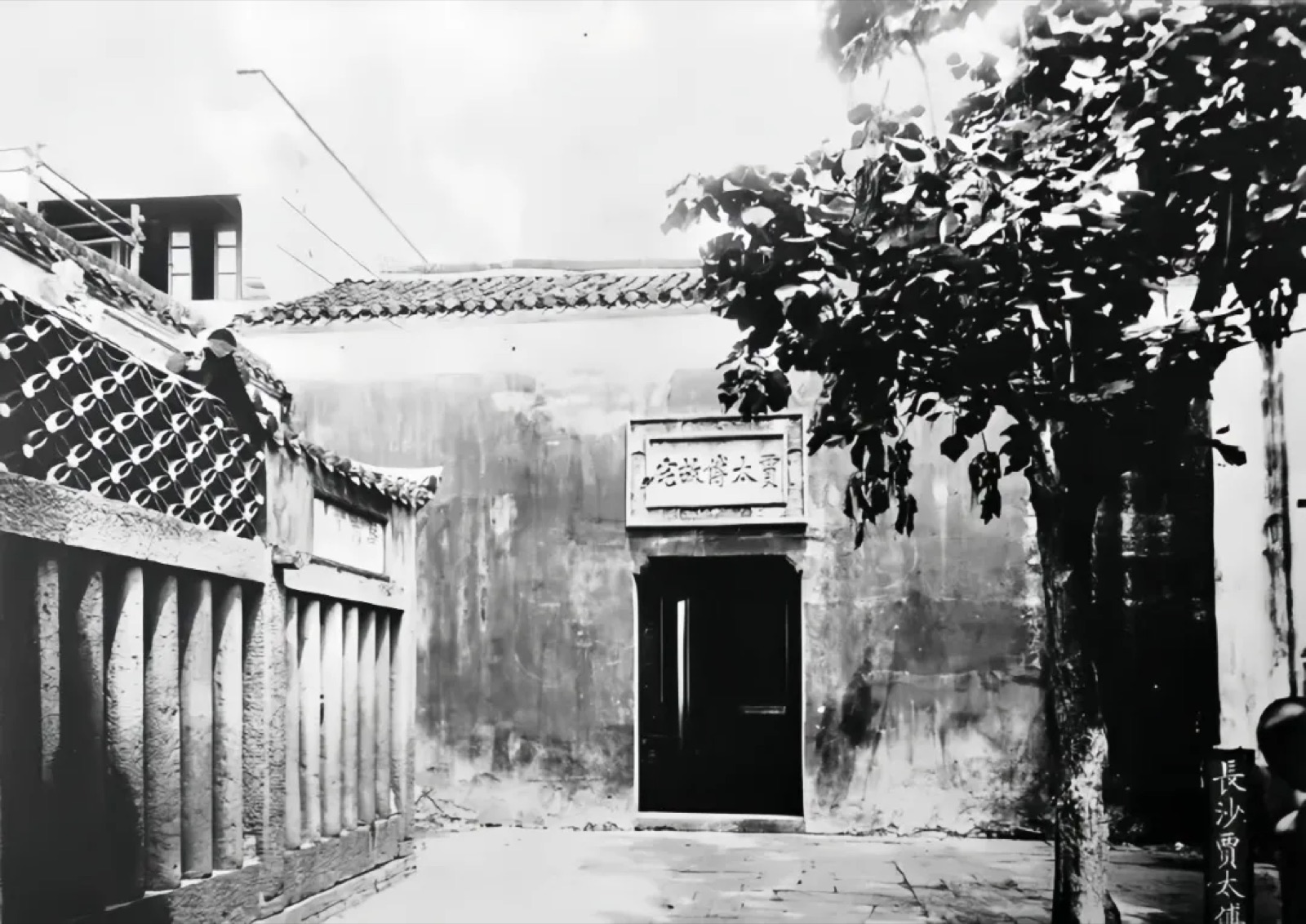
Temples and guild halls crowded the lane — the Tang-Song county offices, a Buddhist nunnery, a shrine to Guan Yu. From Qing times the street filled with oil and salt dealers, dye merchants, yarn and grocers' shops. In the 1850s the Qianyisheng grain warehouse, the Lisheng salt firm, the Yanglongtai nail shop and the Laotongyi paint works were famous far beyond the city; by the century's end, Jiangsu and Jiangning guild halls, a farmers' bank and the Wanshunxiang money house had all moved in. Even Standard Oil and Yale's early hospital had a presence here. And at No. 17 Majia Lane, in the inn called Tongfu Gongzhan, the revolutionary leader Jiao Dafeng planned the 1911 uprising after returning from Hankou.
In the early 1950s my family rented rooms in that very inn for several months — by then it had become ordinary housing, dozens of families sharing a courtyard, and I still remember the children celebrating Children's Day there.
ii. The planned-economy years
By the 1950s, with Wuyi Road open, the street had become a hub of state commerce: the municipal vegetable company, the meat and aquatic products company, warehouses for medicine, sugar and wine, and local produce. My father worked as a purchaser for the vegetable company — the biggest "vegetable basket" in the city, with over a hundred shops under it. When the great floods of the early 1960s drowned our lane on West Chang Street, the company moved my family into its auditorium, and I watched it convene emergency meetings to requisition vegetables from all over the country. My father was dispatched to Mohe, in China's far northeastern corner — and, he loved to tell it, the moment locals heard he came from Chairman Mao's hometown, they loaded more than a dozen full freight cars of potatoes for Changsha without a second's hesitation.
The street was full of such shops: the city's largest paint-and-chemicals store, where families bought blue and teal dye to color homespun cloth for their children; the grain shop in the old Qianyisheng warehouse — founded by the Qing merchant Zhu Changlin, great-great-uncle of a later premier — where long lines formed whenever indica rice arrived, because it "swelled" more generously in the pot; the city's only vegetable-seed shop, where I bought radish seeds in 1969 before being sent down to the countryside. At the corner of Jinxian Street, artisans hand-made steelyard scales — an intangible cultural heritage craft I would watch for hours, especially the tiny medicine scales, so delicate they were the hardest to make.
iii. The market years, and the rebirth
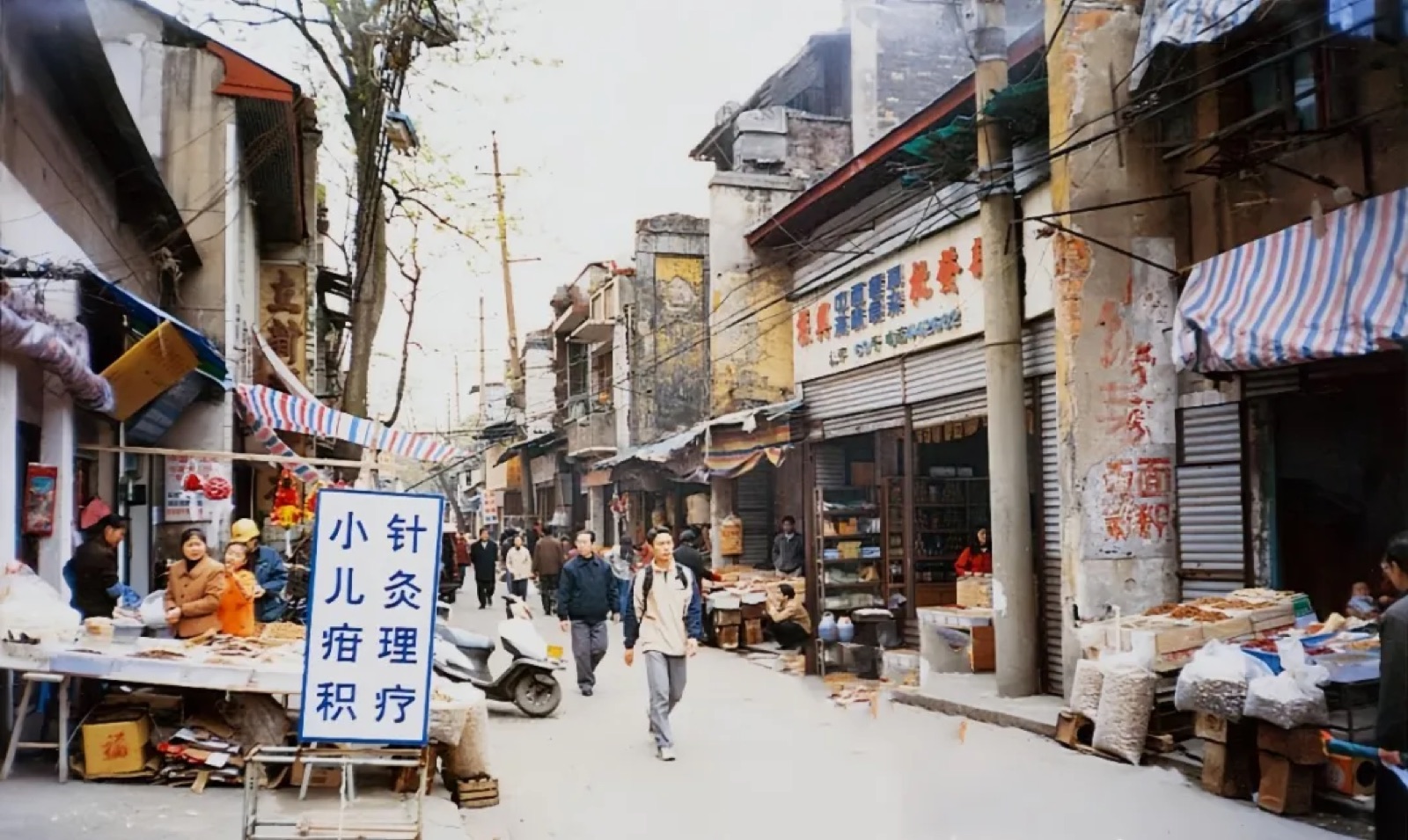
After reform began in 1979, individual traders took over. First farmers from the countryside, then laid-off workers — families pooling money to rent a single storefront, traveling together to Fujian, Guangdong, Hainan, Guangxi and the mountains of Yunnan-Guizhou to buy stock. The street's dry-goods market — groceries, spices, medicinal herbs, grain and oil — undercut the state shops and thrived. When the city's countless small restaurants needed cheap palm oil, traders drove day and night from Hainan and the Vietnam border to deliver it, skipping warehouse costs entirely. Only when the new Gaotiao market opened in 1996, and truck restrictions followed, did the dry-goods era quietly end.
Then came rebirth. In 1996 the city rebuilt the Jia Yi residence on its original site — gatehouse, ancient well, shrine halls, stele corridors — and in 2004 Taiping Street was officially declared a historic and cultural district. The granite-paved lane was restored, the ancient opera stage rebuilt, the "Great Peace" relief carved before the memorial archway. Protected plaques went up on the Jia Yi residence, the old grain warehouse, the mansions of Fujia Lane, the Lu Ban temple. Eighty-seven storefronts reopened along the main lane, many of them old names revived.
And when Changsha's tourism boom arrived, the street's food legends followed — stinky tofu, sugar dumplings, traditional rice noodles, pig's blood soup, milk tea and coffee side by side. Taiping Old Street had become what it had always secretly been: two thousand years of the city, packed into a lane you can walk in ten minutes — and linger in for an evening.